
MNST INSIGHTS
What Is Aviation Security? A Beginner's Guide to Aviation Security Fundamentals
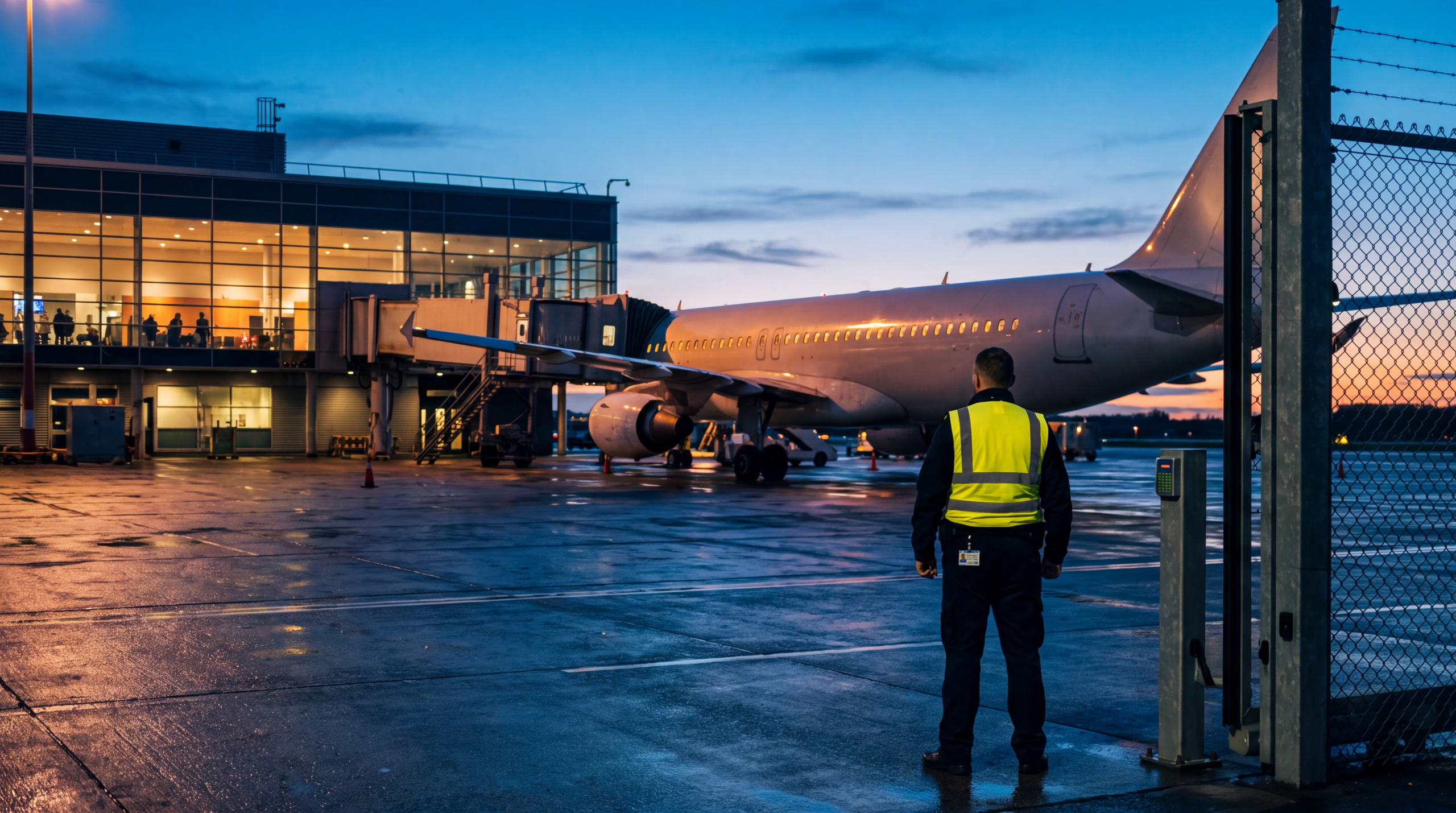
Every day, millions of passengers board aircraft without thinking about the protections around them. IATA expects passenger numbers to reach 5.2 billion in 2026, while air cargo volumes are forecast at 71.6 million tonnes. Each of those journeys depends on aviation security, a system that works almost entirely out of sight.
Most people picture aviation security as the checkpoint: the queue, the scanner and the tray for your belt and laptop. However, screening is only one small part of a much larger system. Behind it sit international standards, national programmes, access controls, trained personnel and a culture of vigilance that extends to every person who works at an airport.
In this guide, you'll learn what aviation security means and how it differs from aviation safety. You'll see what it protects, why it relies on multiple layers, and why every aviation employee shares the responsibility for it. Whether you're starting your first airport role or planning a career change, these fundamentals are the foundation for everything that follows.
What Is Aviation Security?
At its core, aviation security protects civil aviation against deliberate attempts to cause harm. That idea comes directly from the international rulebook, and every national security programme builds on it.
The ICAO Annex 17 Definition in Plain Language
ICAO Annex 17 defines aviation security as protecting civil aviation from acts of unlawful interference, and states that this is achieved through a combination of measures together with human and material resources. You can read how EASA applies this definition in its paper on the impact of security measures on safety.
In practical terms, three elements work together:
- Measures are the rules and procedures.
- Human resources are the trained people who apply them.
- Material resources are the equipment that supports those people, from screening machines to perimeter fencing.
Remove any one of these, and the whole system weakens.
What Counts as an "Act of Unlawful Interference"?
The phrase sounds technical, but the examples are familiar. SKYbrary lists acts such as seizing an aircraft in flight or on the ground, taking hostages on board or at an airport, and forcing entry into an aircraft or aviation facility. The list also covers bringing a weapon or dangerous device on board or into an airport for criminal purposes, and passing on false information that endangers an aircraft or people.
The definition covers attempts as well as completed acts. It also includes hoax threats. A false bomb warning disrupts operations and puts people at risk even when no device exists.
Who Sets the Rules?
International aviation security standards were first adopted by the ICAO Council in March 1974 and became Annex 17 to the Chicago Convention. ICAO sets the global baseline, and each State turns it into national law and oversight.
In the UAE, for example, the General Civil Aviation Authority assesses and approves the security programmes of airport operators, aircraft operators and other stakeholders under the UAE National Civil Aviation Security Programme. To see how these international standards shape professional development, read our article on ICAO aviation security training.
What Is the Difference Between Aviation Safety and Aviation Security?
Beginners ask this question more than almost any other. The answer comes down to one word: intent.
Safety Prevents Accidental Harm
Aviation safety deals with unintentional events. A landing gear that fails to extend because of a mechanical fault is a safety event. So is a maintenance error, or a runway incursion caused by a miscommunication.
Organisations manage these risks through a safety management system. It helps them identify hazards before they lead to accidents.
Security Prevents Deliberate Harm
Aviation security deals with intentional acts. An unauthorised person slipping into the airside area is a security event. So is a prohibited item hidden in a cargo consignment, or a bomb threat phoned in to the terminal. In each case, someone chose to cause harm or tried to.
Where Safety and Security Overlap
The two disciplines often meet. Take foreign object debris (FOD) on a taxiway. If a tool was dropped by accident, it's a safety issue, and standard ramp safety and FOD prevention practices apply. If someone placed that object deliberately to damage an aircraft, it becomes a security matter.
ICAO makes the link between the two explicit. Annex 17 names the safety of passengers, crew, ground personnel and the general public as the primary objective of every State's security measures. Security, in other words, exists to protect safety.
What Does Civil Aviation Security Protect?
The aircraft is the most visible asset, but protection extends much further. Once you understand the full scope, it becomes clear why security touches every department in an aviation organisation.
Passengers
Screening, identity verification and the separation of screened and unscreened travellers keep dangerous items away from the people on board. Passengers are the most visible focus of airport security, but they are only one of six protected groups.
Crew
Pilots and cabin crew are protected by reinforced flight deck doors, strict access procedures and dedicated training. In addition, crew members are trained to recognise threats and respond to them in flight.
Aircraft
Aircraft are protected while parked, during maintenance and before every departure. Access is controlled, and aircraft security checks inspect areas that passengers or ground staff may have reached.
Airports
Airports include far more than terminals. Public landside areas, fuel farms, control towers, navigation equipment and the digital systems that connect them all need protection, because an attack on any one of them can disrupt the entire operation.
Employees
Staff are protected as people, and their credentials are protected as assets. A stolen or borrowed access card gives someone a route into secure areas. That's why ID controls exist to protect both the employee and the system.
Cargo
With tens of millions of tonnes moving by air each year, cargo is a significant potential route for threats. Security controls are applied along the supply chain so that consignments are screened or kept secure before they are loaded onto an aircraft.
Why Layered Security Is the Foundation of Airport Security
No single security measure is perfect. Equipment has detection limits, people get tired or distracted, and anyone intending harm studies the defences they expect to face. Therefore, civil aviation security is deliberately built in layers.
What the Layers Look Like
The US Transportation Security Administration explains this approach clearly. Beyond the visible checkpoint, it uses intelligence analysis, behaviour detection officers and canine teams, along with other measures the public may never see. Each layer can stop an attack on its own, and together their value is multiplied. You can read more about this principle in International Airport Review.
Across the industry, common layers include:
- Intelligence and threat assessment
- Background checks and vetting of staff
- Access control and ID systems
- Perimeter protection
- Screening of passengers, baggage and cargo
- Aircraft security checks
- The everyday vigilance of trained employees
Why No Single Layer Is Enough
A useful way to picture this is the Swiss Cheese Model, a concept widely taught in human factors and Just Culture training. Each layer is a slice with a few holes in it. Harm only gets through when the holes in every slice line up at the same moment.
As a result, the strength of the system depends on every layer doing its job. A screener's sharp eye matters, but so does the cleaner who reports an unattended bag and the technician who refuses to let a stranger follow them through a secure door.
Why Is Aviation Security Awareness Every Employee's Responsibility?
Many new employees assume security belongs to the security department. ICAO takes a very different view. According to ICAO's security culture guidance, everyone has a vital role in airport security, from screeners and cleaners to senior officials, frontline workers, taxi drivers and airport retail staff.
Understanding the Insider Threat
The ICAO Insider Threat Toolkit explains why this matters. It defines insiders as full-time or part-time employees, contractors and temporary staff whose roles give them privileged access to secure locations, items or sensitive security information.
What stands out is how insiders become a risk. They can enable an act of unlawful interference through a lack of awareness, through complacency, or through deliberate malice. Most employees will never intend harm. However, a door propped open or a pass lent "just this once" creates exactly the gap an adversary looks for.
What Good Security Behaviour Looks Like
For anyone working in airport operations and ground handling, aviation security awareness shows up in simple daily habits:
- Wear your ID visibly and check that others do the same.
- Never allow anyone to follow you through a controlled door without their own authorisation.
- Challenge or report unfamiliar people in restricted areas.
- Protect your access card, passwords and any sensitive operational information.
- Report unattended items and suspicious behaviour, even when you're unsure.
None of these habits takes more than a few seconds. Together, they make the human layer strong.
Building Your Aviation Security Fundamentals
Aviation security rewards structured learning. The concepts connect: definitions lead to standards, standards lead to layered measures, and measures only work when people understand their role in them. Learning these topics piece by piece from scattered sources often leaves gaps.
The Aviation Security Fundamentals course from MNST Online brings these foundations together in one place. It covers the difference between safety and security, ICAO Annex 17, access control and insider risk, in a self-paced format designed for beginners. When you finish, you receive a verifiable certificate of completion.
Conclusion
Aviation security is the protection of civil aviation against deliberate harm. It is guided by ICAO Annex 17 and put into practice through national programmes such as the UAE's NCASP. It differs from safety in one key respect, intent, yet the two disciplines constantly support each other.
Security protects passengers, crew, aircraft, airports, employees and cargo, and it does so through multiple layers rather than any single barrier. Above all, it depends on people. Every employee with an access card is part of the system, and every one of them strengthens or weakens it through daily behaviour.
Understanding these fundamentals is the first step toward becoming a confident, security-aware aviation professional.
Want to understand aviation security from the ground up? Explore our Aviation Security Fundamentals course, a self-paced online course that takes you from core definitions to insider risk and finishes with a verifiable certificate.
Would you like our team to contact you? Share your details here and we'll be in touch.
Prefer to speak with us directly? Message us on WhatsApp